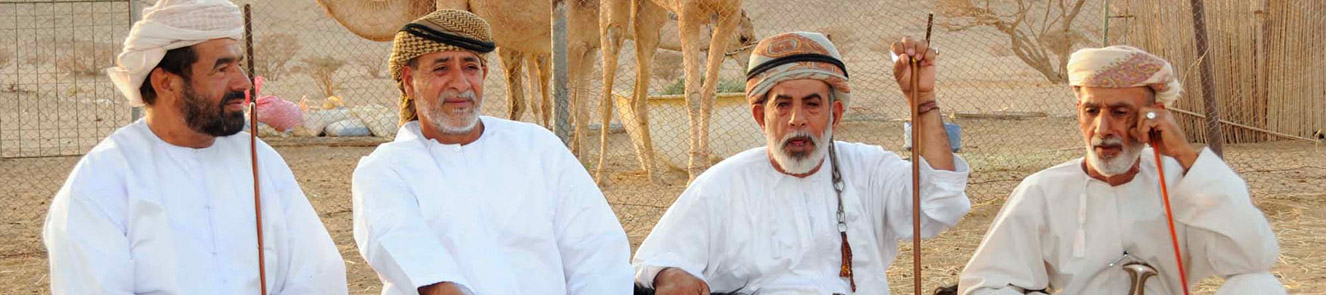
Al Ahalla is one of the folk arts practiced in the United Arab Emirates and a key component of its intangible cultural heritage, particularly in relation to identity and continuity across generations.
Although it belongs to the wider category of Emirati performing folk arts, it may also be classified under the community’s oral traditions and social practices due to its sung Nabati poetry and its distinctive performance movements that set it apart from other arts.
Al Ahalla is performed during religious festivals, public events, weddings, majlis gatherings, and celebrations for entertainment and enjoyment of its refined melodies and elevated performance style.
Unlike other performing arts in the UAE, Al Ahalla traces its roots to historic pearling journeys and is performed without musical or percussive instruments. Performers are not required to adhere to fixed poems or melodies; new compositions may be created for each performance. The art does not rely on the instruments commonly used in many performing folk arts, such as frame drums, large drums, or rhythmic tools, but performers instead hold canes locally known as khizaran. These characteristics contribute to its popularity among the community and the high demand for it at various occasions.
A typical performance begins with 40–60 men seated in two circles, either squatting or resting on their canes. The group is guided by a leader known as the abu, who provides the opening verses in a melody of his choice. The first group repeats the verses, followed by the second group, until the melody is synchronized. Both groups then stand in two facing rows, holding their canes, and alternate between chanting the verse and responding with the refrain, which includes the word “Ahalla.”